Lead with Kindness: DOCO stacks up work, dignity, and kindess
At DOCO Inc. Sheltered Workshop located at 1306 Prince St. in Ava, work can look like building pallets, snapping Easter eggs, washing trays, destroying outdated beverages for recycling, printing shirts, folding towels, cleaning offices, shredding paper or serving ice cream.
But to Executive Director Dawn Cox, the work is also something more.
It is dignity. It is independence. It is community. It is a place where lives are lived.
“This is our second family,” Cox said. “Sometimes we fight like family, but there is a lot of love here.”
DOCO Inc. has been part of Ava since 1977 and will mark its 50th anniversary in 2027. Today, Cox said the workshop is the largest employer of adults with developmental disabilities in the quad county region.
A sheltered workshop is a business or organization designed to provide a controlled, safe and supervised work environment for adults with disabilities. The goal is to provide real work experiences that can, as much as possible, accommodate each employee’s needs while helping them build skills, earn a paycheck and take part in the community.
At DOCO, that work is spread across nine active departments: tray wash, pallet manufacturing, heat treat pallets and lumber, Easter eggs, beverage destruction, laundry service, cleaning service, DOCO Screen Printing and Custom Designs, and shredding services.
Cox said disabled employees are involved in every department in some way. They snap Easter eggs, build pallets, stack trays, stock items in the retail screen printing department and help carry out the contracts DOCO has with several businesses in the community.
“Everyone deserves an opportunity to work,” Cox said.
That work is not symbolic. It is real work for real customers.
In the pallet department, workers build about 600 pallets per week, beginning with cutting lumber and continuing through the building process. The heat treat department prepares pallets and lumber for shipping standards. In the tray wash department, workers wash, dry, sort and restack trays for Copeland, which builds scroll compressors.
The tray wash department stays busy, Cox said, and gives employees the chance to work on stacking, color sorting and shape sorting.
In the Easter egg department, employees assemble plastic eggs filled with candy or toys. Cox said the egg room is often where new workers begin, giving staff a chance to assess their skills and determine where they may be most successful.
Last year, Cox said DOCO employees assembled 2.5 million eggs.
For anyone who underestimates sheltered workshop employees, Cox has a simple answer.
“Why don’t you come see me and we’ll fix that,” Cox said. “I’m a hard worker, and I have workers who would run circles around me.”
The beverage destruction department is another example of production with a purpose. When beverages are outdated or mislabeled, DOCO destroys the product and prepares the materials for recycling. Cox said the workshop is paid for both destruction and recycling.
In 2021, DOCO diverted 25 tons of aluminum, 53 tons of plastic and 36 tons of cardboard from the waste stream through its beverage destruction department.
While recycling remains part of DOCO’s in-house work, Cox said the workshop is no longer able to accept recycling from the general public. The recycling handled at DOCO comes through its departments and business contracts, not public drop-off.
Cox said the clarification is important because unaccepted recycling and trash are still being left at DOCO, especially during evening hours when the workshop is closed. DOCO asks residents not to leave recycling or trash at the workshop unless it is part of an approved arrangement with the organization.
DOCO Screen Printing and Custom Designs has also grown into a visible part of DOCO’s work. The department produces Lead with Kindness apparel, Ava Bears items, custom shirts, business orders, small batch designs and other products for local organizations and customers beyond Douglas County.
Cox said the department shows what can happen when community helps community. When she was getting started, Deana Cain at Pro Design helped her learn more about the screen printing side of the business.
Cox said she sees that as a testament to businesses helping businesses. She also believes there is enough screen printing work for two shops to serve Ava and Douglas County.
One order came from a friend in Illinois after Cox had been marketing DOCO Screen Printing and Custom Designs. The woman’s nephew had made a paper version of a shirt for a family reunion, stapling pieces together and filling it with his design. DOCO helped bring that idea to life and printed 150 shirts from the child’s concept.
Each order includes a thank you postcard signed by the workers who helped prepare, pack and ship it. Cox said the cards give each order a human touch, but they also give employees accountability and pride in the work they completed.
“It allows the workers to remain accountable for their work and be proud of it,” Cox said.
That pride matters because Cox wants the employees to be seen not by what they cannot do, but by what they can do.
“Make them able, not ableist,” Cox said.
For Cox, a paycheck is about more than money. It is about choice, responsibility and feeling fully human.
Some employees use their income for cell phones and cell phone plans, not just month to month service. Cox said when employees receive their first paycheck, they are encouraged to buy something for themselves and something for someone else, even if that gift is a 25 cent piece of gum.
She said it is important for workers to know how to enjoy life, treat themselves and feel the reward of the work they do.
“They deserve to feel human,” Cox said.
That belief also guides the cafeteria. Employees receive two breaks and a lunch, and Cox works with a DOCO employee to provide meals for $1. On the day of the interview, the meal option was chili fries, with an all beef hot dog also available.
Cox said she noticed many employees were not eating well, often bringing cold lunches full of preservatives. The $1 lunch gives them an affordable hot meal, but it also teaches budgeting.
She said that is one reason she has not sought grants for the cafeteria. Cox wants employees to contribute to their meal like other workers do, while still keeping the cost low enough to be manageable.
“They do not deserve to be given things for free,” Cox said. “Let me teach them how to budget.”
Outside the main work departments, DOCO also serves the public through its Blessing Box and DoCones Ice Cream & Snack Shack.
The Blessing Box, located at DOCO, is available for public use. The idea is simple: take a blessing, leave a blessing. Families may leave food or needed items, and others may take what they need.
Cox said the Blessing Box sees regular use from the community. In one April post, DOCO shared that four families had dropped items off in a single Saturday, while six families had used the box.
“That’s a fantastic number,” the post said, noting that children were also involved, both helping stock the box and helping choose what their families needed. “Take a blessing, leave a blessing.”
Nearby, DOCO operates DoCones Ice Cream & Snack Shack, which reopened for the season June 1. The snack shack is open to employees and the public from 10 a.m. to 4 p.m. Monday through Thursday.
The stand offers $1 items, including snow cones, ice cream treats, frozen coffee and lunch. Menu boards outside the stand list frozen coffee flavors, ice cream sandwiches, fudge bars, fruit bars, popsicles, snow cones, hot dogs, chips and water.
Cox said the low prices are intentional. A $1 snack or lunch item makes it possible for employees, families and children out of school for the summer to enjoy a treat without spending much.
Spending $3 on three treats, Cox said, is much more manageable for a family than spending $9.
The snack shack also gives DOCO employees another visible way to serve the public. From the window, workers greet customers, take orders and offer what DOCO called “one of the friendliest service teams in town.”
For Cox, both the Blessing Box and DoCones reflect the same mission that guides the workshop: giving employees a meaningful place in the community while also offering something good back to the people who support them.
Each year, DOCO also hosts a Thanksgiving meal for the community and the workers. Cox said the first time they held the meal, an employee commented that it was the first time in years they had eaten turkey.
After that, Cox decided the meal would become an annual tradition.
This past year, DOCO deep fried 12 turkeys and served between 250 and 300 people.
“The workers love the fellowshipping and eating with the community,” Cox said.
She described the Thanksgiving meal as her favorite day of the year, even above the Christmas party.
“Sometimes they may not have a place to go for Thanksgiving,” Cox said. “Well, they do with us. We put this on for the community as our way of saying thanks.”
DOCO employees also celebrate holidays, attend dances and take part in enrichment activities that help make the workshop feel like more than a workplace.
One of those special events is prom. On March 7, DOCO employees, along with other individuals with disabilities in Douglas County, attended a prom created just for them alongside the Wright County special needs community.
The evening included a red carpet, crowns, tiaras, dresses, suits and tuxes. In a post from that night, DOCO described prom as one of its favorite nights of the year.
“Prom brings all of us so much joy, employees and staff,” the post said. “We’re all sons and daughters of the King but for this night, our employees are royalty and treated as such.”
The event was also supported by community kindness. Ahead of prom, MK’s Blooming Blessings & More and Impressions Floral helped set up donation accounts to provide dresses, suits and tuxes for those attending. The goal was to make sure each person could feel confident, celebrated and prom ready without financial barriers.
For Cox, moments like prom are part of the larger purpose of DOCO. The workshop is a place where employees work, but it is also a place where they are celebrated, supported and given opportunities to experience joy, confidence and belonging.
Cox said one employee even chose to have a wedding at the workshop because it felt like such a safe space.
“Lives are lived here,” Cox said. “This is our second home away from home.”
The workshop also provides a place for employees to be around what Cox calls “true peers,” other people with disabilities who can relate to their experiences, grow with them and form close relationships.
“We’re all their peers, but they get to be around true peers, who they can relate to, grow with and thrive with,” Cox said.
DOCO also hosts a life skills class from the high school, giving students a chance to build practical skills that may prepare them for work at DOCO or other employment.
Cox said those opportunities matter for safety, confidence and independence.
“If they weren’t qualified for us, how would they be safe at Walmart?” Cox said.
She has seen that preparation lead to success. Her oldest son started at DOCO when he was 16 or 17 years old in the egg room. Now 26, he is the egg room manager.
Cox also recalled a former high school student who worked with her and is now employed in a competitive, integrated position in the medical field.
Support at DOCO also goes beyond production. Case managers are often able to meet with employees at the workshop because they know the workers have a set schedule and can be found there.
DOCO provides transportation for employees within Douglas County, helping remove another barrier to employment.
Staff training is ongoing throughout the year. Cox said staff receive extensive seizure training, CPR training and annual training in behavior modification, deescalation and learning about different diagnoses. Sexual harassment training is held twice a year.
Training also includes work skills, cell phone and social media etiquette. Cox said people with disabilities can be vulnerable to blackmail or manipulation online, so she works with employees to help them recognize unsafe situations and understand how to avoid them or get out of them.
Employees also learn about bodily autonomy, including appropriate ways to hug and respect personal boundaries.
Cox has also taken steps to help protect employees outside the workshop.
After one employee was pulled over by law enforcement, Cox could not stop thinking about how a misunderstanding could occur during a traffic stop. One of the signs of the employee’s disability was a fidget spinner in his pocket, and Cox worried about how easily behaviors tied to a diagnosis could be misread.
She created employee identification cards with information on the back alerting officers that the person may have a disability and may need patience or additional care during a traffic stop or other encounter.
Cox later took the cards to the Ava Police Department to make sure officers were still aware of them. Assistant Chief Dwayne Buttersworth went a step further and had the cards laminated so they would look more official, similar to an issued identification card.
Cox stressed that the cards are not a “get out of jail free” card. They are simply a tool to help officers understand that the person may have a disability and may require a different approach.
The cards are currently recognized in Ava, where the police department is aware of them.
That focus on patience, understanding and grace connects to one of the most visible parts of DOCO’s identity: Lead with Kindness.
Cox said she has used the phrase for years with employees, reminding them that their emotions are valid, but their actions should still lead with kindness. In 2021, DOCO trademarked the phrase.
Today, the workshop offers more than 25 Lead with Kindness apparel designs, including designs that celebrate different diagnoses and spread the message of kindness and inclusion.
At DOCO, Cox said kindness is not just a slogan. It is an expectation, a teaching tool and a way of moving through the world.
She said the mark of a person is often shown in how they treat someone who may not be able to help them in return.
The same belief can be seen in DOCO’s community partnerships. Cox said the City of Ava and the Ava Police Department have been supportive, and Living Land Collective hosts enrichment classes for DOCO employees every other Friday. One Friday may include pottery, while the alternating Friday may include music.
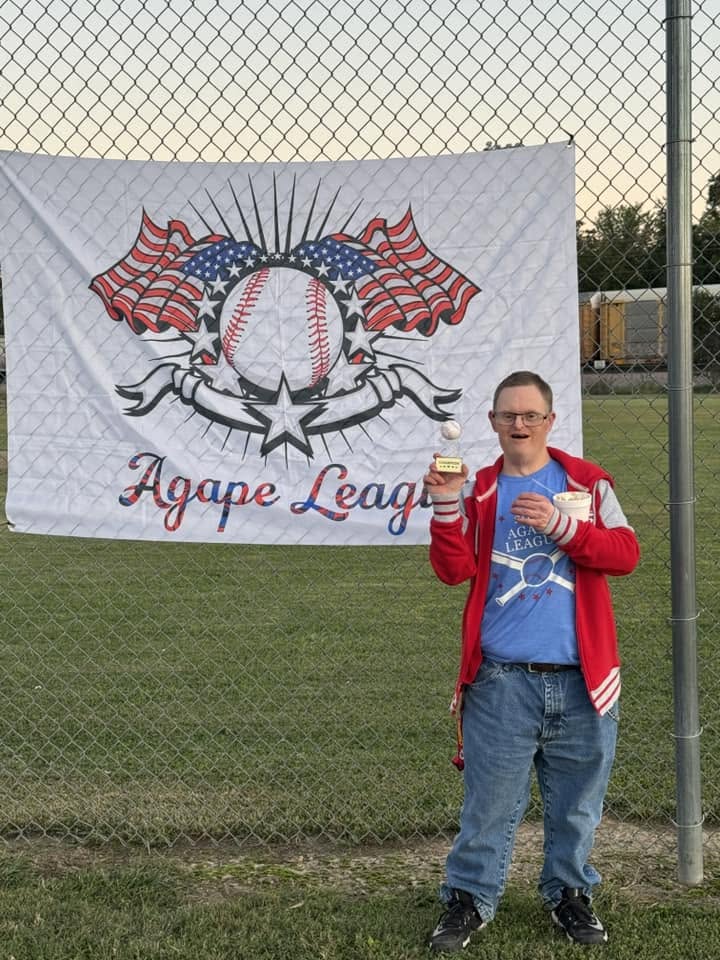
Cox also mentioned AGAPE League, which is held each September on Thursdays in Douglas County. Each week, players take the field with volunteer partners who help them play ball. Cox said 30 volunteers help 30 softball players, giving participants another opportunity to be active, included and celebrated.
Through all of it, Cox keeps returning to the same message: adults with disabilities are not separate from the community. They are part of it.
They work here. They earn money here. They shop here. They eat here. They serve businesses here. They build friendships here.
“First and foremost, the disabled are here in the community, spending dollars,” Cox said.
At DOCO Inc. Sheltered Workshop, the work may begin in the egg room, the pallet department, the laundry service, DOCO Screen Printing and Custom Designs, the tray wash line or the window of the snack shack.
But the heart of the work is found in something much bigger.
It is found in a paycheck earned, a meal shared, a shirt printed, a Thanksgiving plate served, a first job, a safe place, a second family, a prom night where employees are treated like royalty and a community being asked to lead with kindness.